Pirates Canal Bacalar: history, what to see and how to visit it

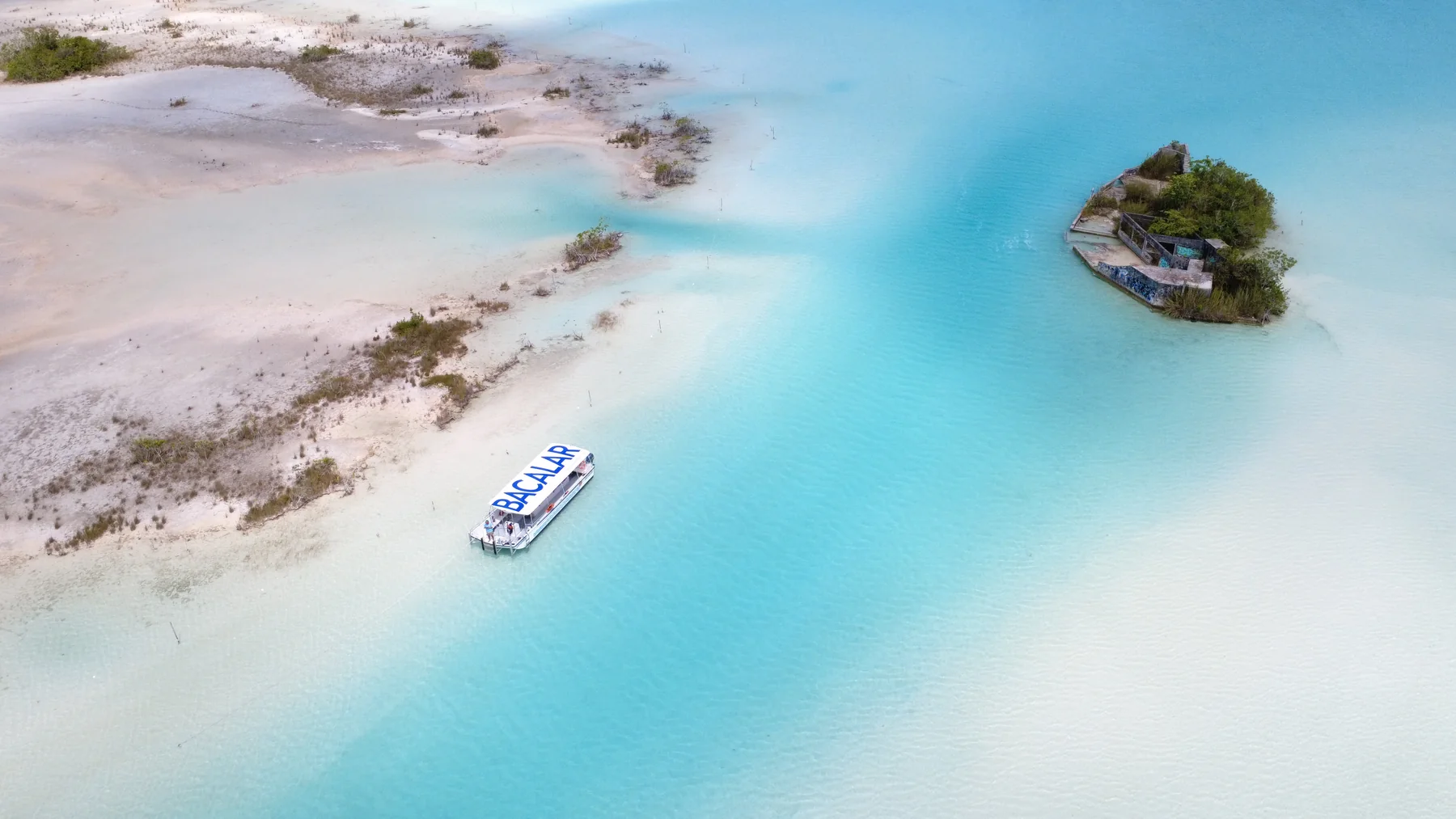
The Pirates Canal is a narrow channel of shallow waters that connects Bacalar Lagoon with Laguna Mariscal and is part of the ancient water route that linked Bacalar with the Hondo River and Chetumal Bay. Today it is one of the most famous places in the Lagoon of the Seven Colors for its turquoise waters, its history, and its landscape.
There are places that attract attention for their beauty and others for the stories they hide.
The Pirates Canal has both.
Just a few minutes by boat from Bacalar, the lagoon seems to transform. The water becomes clearer, the bottom appears beneath the surface, and different shades of turquoise mix around a narrow passage surrounded by vegetation.
It is one of those places where it is easy to understand why Bacalar ended up being known as the Lagoon of the Seven Colors.
But the name of the canal reveals that much more happened here than just a change of scenery.
What is the Pirates Canal?
The Pirates Canal is a narrow and shallow canal located to the east of Bacalar Lagoon. It directly connects the main lagoon with Laguna Mariscal, from where the water system continues to wetlands, channels, the Chac Estuary, and the Hondo River region.
From a geographical point of view, it is a small door within a much larger water system.
From a traveler's perspective, it is one of the most recognizable landscapes of Bacalar.
Its shallow and clear waters make the water take on especially intense turquoise shades, very different from the deep blues that appear over some cenotes in the lagoon.
Learn more about Bacalar Lagoon and its main attractions
Why is it called the Pirates' Canal?
The Pirates' Canal gets its name from its connection to the ancient navigation and trade routes that linked Bacalar with other bodies of water in the region and that, during the colonial era, were associated with pirate incursions and the transport of goods.
Long before tourism, the water was one of the main communication routes in the south of the peninsula.
These routes allowed connection from the interior to the Hondo River and the Caribbean coast. Later, during the colonial era, they were used by traders and were also exposed to attacks and incursions by pirates interested in the region's resources.
That explains why Bacalar ended up becoming a strategic point and why its history is so linked to trade, attacks, and defense.
The San Felipe Fort, which still dominates the center of Bacalar, is perhaps the most evident reminder of that time.
What is there in the Pirates' Canal?
Today the Pirates' Canal is mainly a place to enjoy the water.
It is common to arrive by sailboat, pontoon, boat, kayak, or paddleboard and stop in the surroundings to contemplate the landscape or swim in the permitted areas.
You will also see a curious concrete structure that resembles the silhouette of a ship.
It is relatively modern and has no relation to the ancient pirates, although over time it has become one of the most photographed elements of the place.
What is really interesting, however, is around: the water, the landscape, and the feeling of entering another part of the lagoon system.
Can you swim in the Pirate Canal?
Yes. The Pirate Canal is known for its shallow waters and is a regular stop for swimming during tours of the Bacalar Lagoon, always respecting the permitted areas and navigation and safety instructions.
The shallow depth allows for a clear view of the light bottom and the different shades of water.
However, the canal is also part of a navigation route, so it is always important to follow the crew's instructions and avoid the boat traffic areas.
Local recommendation
If you can choose, visit the Pirate Canal in the morning.
With good light, the clear bottoms make the turquoise tones stand out especially and the transition between the Bacalar Lagoon and the canal is much better appreciated from the water.
And when you arrive, don't rush.
For a few minutes, put your phone aside and look towards both ends of the canal.
On one side is the vast blue expanse of Bacalar.
On the other side begins Laguna Mariscal and a water route that continues through wetlands and canals to a much lesser-known part of the region.
That's when the place starts to make sense.
How to visit the Pirate Canal?
The easiest way to visit the Pirate Canal is by taking a tour of the Laguna de Bacalar on a sailboat, pontoon, catamaran, or motorboat. It is also possible to arrive by kayak or paddleboard depending on the departure point and the day's conditions.
The Pirate Canal is part of many classic routes through the lagoon and is usually combined with other places like Bird Island, Emerald Cenote, and Black Cenote.
DayTour Bacalar offers different shared and private experiences to explore these attractions from the water.
Discover the Pirate Canal with DayTour Bacalar
Sail through the Lagoon of Seven Colors, visit the Pirate Canal, and discover some of the most representative places of Bacalar accompanied by our local captains and guides.
Explore the tours of Laguna de Bacalar with DayTour Bacalar
Beyond the Pirate Canal
For most visitors, the tour ends here.
But geographically the Pirate Canal is exactly the opposite: it is the beginning of another part of the lagoon system.
Behind it is Laguna Mariscal and, further on, a succession of canals, wetlands, and the Chac Estuary that lead to a much less visited region.
Here much of the movement of the classic route disappears and the landscape becomes quieter, narrower, and wilder.
It is the natural continuation of the ancient water route associated with the history of Bacalar.
Do you want to know what lies beyond the Pirate Canal?
Beyond Bacalar: Pirate Route is an experience from DayTour Bacalar created for those who want to continue the route and explore a part of the lagoon system that most visitors never know.
The tour continues beyond the Pirate Canal towards Laguna Mariscal, canals, mangroves, and areas linked to the ancient pirate route, showing a completely different face of Bacalar.
Discover Beyond Bacalar: Pirate Route
It is a small hint of something that Bacalar reveals little by little: the Lagoon of Seven Colors is much larger and more complex than it seems from the town.
Continue discovering Bacalar in our Bacalar Guide
Traveling to Bacalar?
Complete your experience by exploring the Lagoon of Seven Colors with DayTour Bacalar.
View Tour Catalog